Advertising With video
Google Search Ads vs. YouTube Ads: Where Should a Small Business Spend First?
The two ad types are not rivals; they do two different jobs. Here is the difference, how each is billed, and which to start with in your situation.
Video transcript
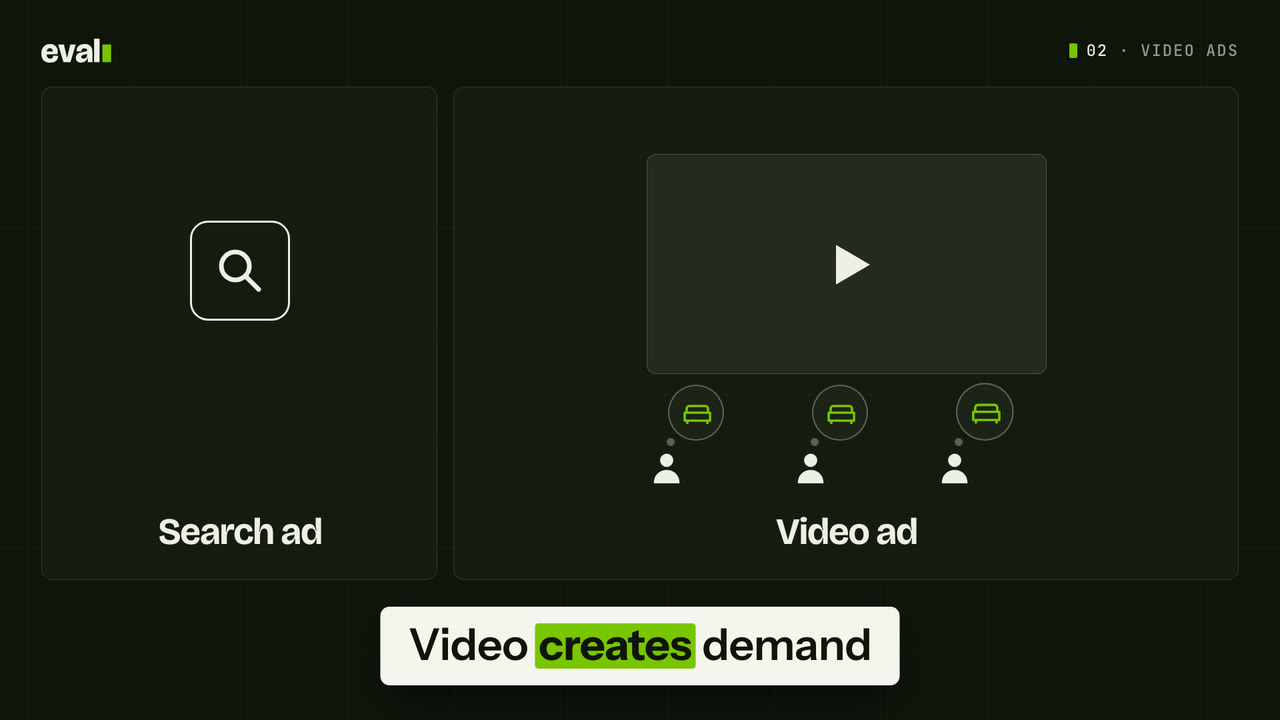
Search ads and YouTube ads do two different jobs. A search ad answers someone who is already looking. It captures demand. A YouTube ad reaches people before they search. It creates demand. If people already search for what you sell, start with search. If nobody knows they need you yet, video comes first. Best of all: use both, in that order.
Contents
- Two jobs: capturing and creating
- How are they billed?
- What does each need in order to work?
- Which to start with? Four typical situations
- How do the two work together?
- Three mistakes worth avoiding
- Do you need an expensive video?
- In summary
Want help deciding?
Request an advertising quoteAnyone spending on online advertising for the first time usually gets two pieces of advice at once: “Google Ads is the safest bet” and “it’s all about video now.” There is truth in both, but they are about different things. Search ads and YouTube ads are not two solutions to the same job; they are solutions to two separate jobs.
Once you understand that difference, the question “which should I spend on?” largely answers itself.
Two jobs: capturing and creating
A search ad captures existing demand. Someone types “AC repair Phoenix” into Google, and your ad appears above the results. This person already knows what they want and is looking for a provider. You do not have to convince them they need air conditioning, only that they should order from you.
A YouTube ad creates demand. The viewer is watching a home renovation video and is not looking for an air conditioner. Your ad shows them there is a solution that also heats, and costs less than they expected. If you do it well, a few weeks later they are the one typing your company’s name into the search box.
So one works at the bottom of the funnel, at the moment of decision. The other works at the top, before the need has even been put into words.
How are they billed?
Search ads: you typically pay per click. If the ad appears but nobody clicks, it costs nothing. The price of a click is set by auction: it depends on how many advertisers bid on the same search and how relevant your ad and landing page are. In competitive markets a click can be expensive, but it comes from a person who is about to buy.
YouTube ads: it depends on the format and the bidding method. For the best-known format, the video ad that can be skipped after five seconds, with per-view billing you typically pay when the viewer watches at least 30 seconds (or the whole ad if it is shorter) or clicks on it. You do not pay for someone who skips after five seconds, yet they have seen your brand. Other formats are billed per thousand impressions.
A view generally costs much less than a search click. But do not compare the two directly: a view means attention, a search click means intent.
What does each need in order to work?
| Search ads | YouTube ads | |
|---|---|---|
| Precondition | People already search for what you offer | You can define who your potential buyers are |
| What you have to produce | Keyword list, ad copy, landing page | Video, targeting, landing page |
| When it brings results | Fast, even within days | More slowly; the effect builds over weeks |
| What to measure | Inquiries, purchases, cost per inquiry | View rate, brand searches, inquiries |
| Main risk | Expensive clicks on the wrong searches | Many views with no measurable result |
Which to start with? Four typical situations
1. You offer a well-known service, locally or nationally. A plumber, an accountant, a dentist, an online store in a familiar product category. People know exactly what they are looking for, and they are looking. Start with search ads. The money is quite literally lying on the street here: whoever searches today orders from someone tomorrow.
2. You offer a new kind of product or service. One that people do not search for because they do not know it exists. Search ads bring little traffic here, because there is nothing to appear for. You have to show the problem and the solution with video. As a supplement, it is worth advertising on searches for the related problem.
3. You are in a crowded market where clicks are very expensive. If you can no longer grow profitably in search ads, video can help get people to search for your brand instead of the generic phrase. A brand-name search is cheaper, and harder for competitors to poach.
4. Your budget is tight and you need results quickly. Search ads, with a few carefully chosen keywords and a single good landing page. Video can wait until the search campaign is bringing inquiries and there is something to learn from.
How do the two work together?
The best results come from both together, and the order matters.
- Search ads first. They show which searches and messages bring real prospects. The landing page proves itself along the way.
- Then video. It carries the message the search campaign has already shown to work. Video reaches people who would not have searched on their own.
- Finally, remarketing. Those who watched the video or visited your site but did not get in touch can be addressed again: with video, with search ads, or with both.
A viewer watches the video, does not click, but two weeks later, when they need the service, they search for your company’s name. If your search ad is not there at that moment, the benefit of the money spent on video lands with a competitor.
Three mistakes worth avoiding
Measuring video by clicks. YouTube viewers rarely click; that is not why they are there. Video’s effect also has to be measured in the number of brand searches, direct visits, and the behavior of remarketing audiences. If you only look at clicks, video will always lose to search ads, even when it is in fact bringing some of your customers.
Starting without tracking. If the ad platform cannot see which click became an inquiry, it cannot optimize for it. In both cases the first job is to set up and verify conversion tracking.
Sending traffic to the homepage. An ad makes a specific promise, and the visitor has to see it again on arrival. We wrote about the page that does this here: Anatomy of a high-converting landing page.
Do you need an expensive video?
Not necessarily. A fifteen-to-thirty-second animated, captioned video can be made without a shoot, and explains many services better than live footage does. What matters is the first five seconds: the problem and the promise have to be stated there, and the brand has to appear there. The video at the top of this article was made that way.
In summary
If people already search for what you offer, start with search. If they do not know you yet, start with video. If you can, use both, in that order, and measure what happens. The question is not which is better, but where your customer stands right now: already searching, or not yet aware that they should be.